For most Gold Coast homes the realistic choice is pre-painted steel such as Colorbond, concrete tile, or terracotta tile. Steel is light, quick to install and suits low pitches and storm-prone sites, but needs the right grade near the beach. Concrete tile is economical and quiet but its surface wears. Terracotta holds its colour and lasts very well but is heavy and costs more. Exposure, pitch, frame and budget usually settle it.
Start with the house and the site
Before comparing brochures, answer four questions about your house:
- How far is it from breaking surf? A beachfront home at Mermaid Beach faces a very different environment from a home in Mudgeeraba.
- What pitch is the roof? Low-pitch and skillion roofs narrow the options to steel profiles designed for them.
- What can the frame carry? Tile is heavy. A frame built for steel or fibro may not carry tiles without engineering.
- What does the street look like? Character areas, estates with covenants and body corporate schemes may have rules or expectations.
Those answers usually narrow the choice to one or two materials.
Pre-painted steel (Colorbond and similar)
Steel is the most common choice for new roofs and re-roofs on the Gold Coast.
Strengths
- Light, which reduces load on the frame and suits older homes.
- Long sheets with few joints, so less opportunity for wind-driven rain to get in.
- Suits low pitches with the right profile.
- Quick to install, so the house is open for less time in storm season.
- Wide colour range, including light colours that reflect more heat.
Watch-outs
- Grade matters near the coast. Standard products suit most suburbs; homes close to the surf need products designed for severe marine conditions.
- Fixings, flashings and gutters must be compatible, or they corrode first.
- Louder in rain without a blanket.
- Can dent in large hail.
See Colorbond roofing and salt-resistant roofing options.
Zincalume and unpainted steel
Unpainted zinc-aluminium coated steel is cheaper than pre-painted and has a bright finish. It suits sheds and some character homes. It reflects a lot of sunlight, which can cause glare for neighbours. In severe marine environments, check the manufacturer's guidance carefully.
Concrete tiles
Concrete tiles cover a large share of Gold Coast homes built from the 1970s onward.
Strengths
- Economical among tile options.
- Quiet in rain.
- Thermal mass can slow heat transfer.
- Many profiles and colours.
Watch-outs
- Heavy, so the frame must be designed for them.
- The colour is a surface coating that wears over the decades, after which tiles become porous and grow lichen readily in humid conditions.
- Ridge capping mortar needs periodic maintenance.
- Minimum pitch limits; not suitable for very low-pitch roofs.
Terracotta tiles
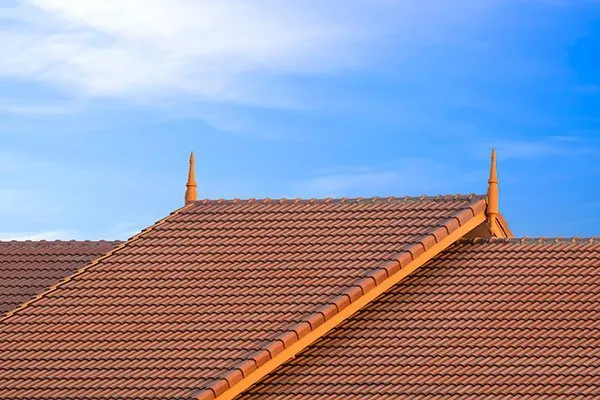
Terracotta is fired clay. Its colour runs through the tile.
Strengths
- Holds its colour for a very long time.
- Very durable when undisturbed.
- Quiet, with a classic look that suits many older homes.
- Unaffected by salt in the way steel is, though its fixings and flashings still need care.
Watch-outs
- Heavy and costs more than concrete.
- Brittle underfoot, so trades walking on it can crack tiles.
- Can crack in large hail.
Other materials you may see
- Fibre cement and asbestos cement: older fibro roofs. New fibre cement roofing is uncommon; old sheeting may contain asbestos and must be assessed before work. See asbestos roof replacement.
- Polycarbonate: for patios and pergolas, not main roofs.
- Membranes: for flat concrete roofs on units and commercial buildings.
- Copper and zinc: rare, specialist and expensive.
Side by side
| Factor | Pre-painted steel | Concrete tile | Terracotta tile |
|---|---|---|---|
| Weight | Light | Heavy | Heavy |
| Low-pitch suitability | Good with right profile | Limited | Limited |
| Salt exposure | Needs correct grade | Fixings need care | Fixings need care |
| Rain noise | Louder without blanket | Quiet | Quiet |
| Colour retention | Good, depends on product | Surface wears | Excellent |
| Upkeep | Rinse salt, clear gutters | Ridge capping, lichen | Ridge capping |
| Install speed | Fast | Slower | Slower |
Heat and energy
The Gold Coast summer is long and humid. Roof colour has a big effect on how much heat reaches the roof space: lighter colours reflect more. What sits under the roof matters as much: a blanket or sarking, ceiling insulation and roof-space ventilation. Our guide to energy-efficient roofing materials goes into this.
Storms and wind
Houses are designed to a wind classification under Australian standards, and the roof must be fixed accordingly. The best material poorly fixed will fail before a modest material well fixed. During a re-roof, ask the contractor to check batten and rafter fixings and explain what standard they are working to.
Bushfire hazard areas
Parts of the hinterland are in City of Gold Coast bushfire hazard areas. New roofing there may need to meet construction requirements for a bushfire attack level, which affects materials, sarking and gap sealing. A building certifier can confirm what applies.
Our suggestion
For most Gold Coast homes, steel in the right grade and a light-to-mid colour, over a good blanket and properly fixed battens, is a practical default. Tiles remain a good choice where the frame suits them, the look matters and the owner prefers a quieter roof. Compare the two in detail in Colorbond vs tile, and get prices from the cost guide.
An independent local roofing contractor can inspect your roof and recommend materials for your situation. Call 07 5241 1403 or use the form below.
General information about roofs on the Gold Coast, not advice about your roof. Rules, products and programs change; check with the body named (QBCC, City of Gold Coast, Workplace Health and Safety Queensland) before you act.